
Thursday, June 7, 2012


Wind Powers Green Living Project in Kenya
Wind Powers Green Living Project in Kenya
In our series “In Action," the opportunities and benefits of personal wind turbines are shared through customer testimonials and regional case studies.
 Jane and Robert Jann have been building a model for sustainable living in Awendo, Kenya for several years. Along with food gardens and a home built using low-impact construction techniques, this site includes small-scale wind power to pump drinking water. The couple hopes that the site will serve as a case study for sustainable development and eventually supply UV-purified drinking water for people living in the area.
Jane recently corresponded with Southwest Windpower about this project.
SWWP: Tell us about your project in Awendo?
JJ: We started out committed to making an environmentally friendly home. Our aim was to bring some basic and necessary services, like clean drinking water, into the community around us. In the project home, we drilled a 135-meter (440 ft) well.
Other activities initiated in the community included education about building with SSBs (stabilized soil blocks) to enable the people to build cheap affordable houses and are organizing the planting of vegetables and useful ornamental trees that bear fruit.
SWWP: How do you plan to purify water for the surrounding community?
JJ: The water is pumped directly into a 6,000-liter water tank. Later when we have enough energy to pump through the ultraviolet filter, we will pump water directly into sterile containers and share with the neighbors. Three immediate adjoining homes have expressed a wish to be connected to the water supply. We will consider this option as well when our energy production is ready.
SWWP: How many households or individuals will eventually benefit?
JJ: According to the last census in mid-2007, there would be close to 400-500 people, a mix of adults and children, to be supplied with clean drinking water.
SWWP: Tell us about the wind turbine the site uses.
JJ: We bought the first Whisper 200 in 2006 from a Swiss dealer. We installed it in Kenya that December. The whole wind turbine project was put together by my husband, Robert, who made all the calculations for the installation after we bought the wind turbine. We also bought the guy-wires from Switzerland. The turbine is on a 6 m (20-ft) tower, made from metal bought locally in Kenya.
SWWP: How will this project home serve as an example?
JJ: All the necessary Kenyan government officials within the district know of the project due to its unique position as a first individual effort. It was not intended directly as a model. There are nongovernmental organizations (NGOs) I worked with during my research into the project: KWAHO, Kenya Water for Health Organization, Rongo District; SANA, Sustainable Aid in Africa; Kisumu and Practical Action East Africa, Nairobi Office as well as the Kisumu office. I am currently looking into actively involving either the government or other NGOs with common interests.
SWWP: Do you have plans to take this model elsewhere?
JJ: A project on Lake Victoria will most likely evolve along the same lines as the Awendo project. We wish to make these projects happen, but time and money are key. As long as we have to work jobs to keep the projects going, it means a long, slow process. I make time to go to Kenya twice a year, mid-year for a month or two, and together with Robert for our December holidays.
If we find a suitable organization to take over our project in Awendo, we will establish the Lake Victoria site as an owner-occupied lodge/resort incorporating buildings that preserve the environment. We aim to integrate the site with the local fishing community. With wind energy, we are planning again to pump water from a well. Although local residents live near the lake, the water from the lake is not clean enough for drinking unless it is boiled or treated with chemicals.
The lodge would use wind, solar and biomass as the only energy sources. I am working on a business plan to present to possible investors. I am looking to establish a place that would allow the guests to get involved in the communal activities during their visits, as well as create employment where currently there is none.
In our series “In Action," the opportunities and benefits of personal wind turbines are shared through customer testimonials and regional case studies.
Jane recently corresponded with Southwest Windpower about this project.
SWWP: Tell us about your project in Awendo?
JJ: We started out committed to making an environmentally friendly home. Our aim was to bring some basic and necessary services, like clean drinking water, into the community around us. In the project home, we drilled a 135-meter (440 ft) well.
Other activities initiated in the community included education about building with SSBs (stabilized soil blocks) to enable the people to build cheap affordable houses and are organizing the planting of vegetables and useful ornamental trees that bear fruit.
SWWP: How do you plan to purify water for the surrounding community?
JJ: The water is pumped directly into a 6,000-liter water tank. Later when we have enough energy to pump through the ultraviolet filter, we will pump water directly into sterile containers and share with the neighbors. Three immediate adjoining homes have expressed a wish to be connected to the water supply. We will consider this option as well when our energy production is ready.
SWWP: How many households or individuals will eventually benefit?
JJ: According to the last census in mid-2007, there would be close to 400-500 people, a mix of adults and children, to be supplied with clean drinking water.
SWWP: Tell us about the wind turbine the site uses.
JJ: We bought the first Whisper 200 in 2006 from a Swiss dealer. We installed it in Kenya that December. The whole wind turbine project was put together by my husband, Robert, who made all the calculations for the installation after we bought the wind turbine. We also bought the guy-wires from Switzerland. The turbine is on a 6 m (20-ft) tower, made from metal bought locally in Kenya.
SWWP: How will this project home serve as an example?
JJ: All the necessary Kenyan government officials within the district know of the project due to its unique position as a first individual effort. It was not intended directly as a model. There are nongovernmental organizations (NGOs) I worked with during my research into the project: KWAHO, Kenya Water for Health Organization, Rongo District; SANA, Sustainable Aid in Africa; Kisumu and Practical Action East Africa, Nairobi Office as well as the Kisumu office. I am currently looking into actively involving either the government or other NGOs with common interests.
SWWP: Do you have plans to take this model elsewhere?
JJ: A project on Lake Victoria will most likely evolve along the same lines as the Awendo project. We wish to make these projects happen, but time and money are key. As long as we have to work jobs to keep the projects going, it means a long, slow process. I make time to go to Kenya twice a year, mid-year for a month or two, and together with Robert for our December holidays.
If we find a suitable organization to take over our project in Awendo, we will establish the Lake Victoria site as an owner-occupied lodge/resort incorporating buildings that preserve the environment. We aim to integrate the site with the local fishing community. With wind energy, we are planning again to pump water from a well. Although local residents live near the lake, the water from the lake is not clean enough for drinking unless it is boiled or treated with chemicals.
The lodge would use wind, solar and biomass as the only energy sources. I am working on a business plan to present to possible investors. I am looking to establish a place that would allow the guests to get involved in the communal activities during their visits, as well as create employment where currently there is none.
Chevy Volt Powered By Wind Energy
Chevy Volt Powered By Wind Energy
In our series “In Action," the opportunities and benefits of personal wind turbines are shared through customer testimonials and regional case studies.
 One lucky Chevy Volt was driven around Hereford, Texas, producing zero emissions not only from the car itself, but also from the source it was charged on. KPAN Radio, a local Hereford station, was given a week to test-drive a Chevrolet Volt provided by Stevens 5-Star, a local car dealership.
 The station used their Skystream 3.7 personal wind turbine installed on site at their studio to fully recharge the Volt. By combining the two innovative technologies, the car drove many miles, but produced zero emissions, setting a precedent for how renewable vehicles and renewable energy sources might work in tandem in the future.
The Skystream 3.7 was installed at the studio in 2007 and annually produces about 20 percent of the electricity consumed on location.
In our series “In Action," the opportunities and benefits of personal wind turbines are shared through customer testimonials and regional case studies.

The Skystream 3.7 was installed at the studio in 2007 and annually produces about 20 percent of the electricity consumed on location.
Tuesday, May 29, 2012
The Busy Little Bee

Nest: Smart Thermostat

By: Earth Techling
May 27, 2012
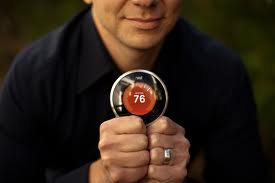
Reducing home energy consumption can be as simple as programming your thermostat to raise or reduce the indoor temperature depending on the time of day, and your normal routine. But for Tony Fadell, a former Apple employee who had a hand in designing the iPod, that simple functionality just wasn’t enough.
Wondering what it would be like to see the Nest in action? You’re in luck! The company recently announced that the thermostat will be available for purchase and hands on demonstrations at over 500 Lowe’s Home Improvement stores across the nation. The stores will feature Nest in their new in-store Innovation merchandising displays, as well as online. This partnership puts Nest within reach of millions of mainstream consumers, and allows them to get installation advice from Lowe’s customer service reps.
And there’s more than ever to see. Just last month, we reported on Nest’s latest round of high tech upgrades, including an expanded energy history view—this time a full 10 days—available as a Web application and via both Android and iPhone smartphones; access to Airwave, a new and exclusive energy-saving feature which sucks every last breath of cold air from your air conditioning system; and Wifi connectivity.
Organic Roundup Replacement
How To Make An Organic Roundup Replacement
 Courtesy of: Hippocrates Institute
Vinegar is a fantastic weed killer. It is non toxic, biodegradable, readily available, and it is cheap. Go to your local grocery store and purchase a gallon of white vinegar. It usually sells for... around $3. You can find a heavy duty squirt bottle at your local garden store. I recommend buying a good one, as the cheap ones do not last. For a few dollars you can buy a quart sized bottle that should last at least a year. Fill up with straight vinegar, do not dilute. Use this to spray directly on weeds that you want to get rid of. Some pesky buggers may require 2 or 3 applications.You can also use this in place of bleach. I have a couple spray bottles and have one in the garage labeled weed killer, another under the kitchen sink labeled disinfectant.
It works well, its cheap, and its all natural! You will not be poisoning the earth, risking cancer, or supporting Monsanto! WOO HOO!!! :)
Vinegar is a fantastic weed killer. It is non toxic, biodegradable, readily available, and it is cheap. Go to your local grocery store and purchase a gallon of white vinegar. It usually sells for... around $3. You can find a heavy duty squirt bottle at your local garden store. I recommend buying a good one, as the cheap ones do not last. For a few dollars you can buy a quart sized bottle that should last at least a year. Fill up with straight vinegar, do not dilute. Use this to spray directly on weeds that you want to get rid of. Some pesky buggers may require 2 or 3 applications.You can also use this in place of bleach. I have a couple spray bottles and have one in the garage labeled weed killer, another under the kitchen sink labeled disinfectant.
It works well, its cheap, and its all natural! You will not be poisoning the earth, risking cancer, or supporting Monsanto! WOO HOO!!! :)
Thursday, April 5, 2012
Bamboo: The Next Wonder Material!

Move Over Graphene: Bamboo Is the Next Wonder Material!
By: Mark Halper
April 4, 2012
Step aside graphene, there’s a new super material in town, and it’s a lot more common than you and your honeycombed carbon lattices: Bamboo!
“Bamboo is being hailed as a new super material, with uses ranging from textiles to construction,” writes the BBC in an article coinciding with its radio report Green Gold: The Bamboo Boom (available for listening through April 9, possibly 10). “It also has the potential to absorb large amounts of carbon dioxide, the biggest greenhouse gas, and provide some of the world’s poorest people with cash.

Bamboo house under construction in Martinique.
“Today you can buy a pair of bamboo socks or use it as fully load-bearing structural beam in your house - and it is said that there are some 1,500 uses for it in between.”
The fast growing rugged grass has “unrivaled capacity to capture carbon” the article claims.
The bamboo industry hails the crop’s other environmental benefits. Because it shoots up quickly - as much as a meter (over 3 feet) in a day - it is highly renewable!
According to the Bamboo Clothing website, it thrives without fertilizers or pesticides, requires little water, grows on slopes too inhospitable for other crops, and has a 10 times higher yield per acre than cotton. Want more? It does not uproot soil (harvesting involves cutting it as it’s a grass) and it’s 100 percent biodegradable, the website notes.
The World Bamboo Organization says today’s bamboo market is $10 billion and could double in five years. China produces about 80 percent of the world’s supply, but other nations are turning to it as a cash crop.

“In eastern Nicaragua, bamboo was until recently regarded by most of the local population as valueless - more as a nuisance to be cleared than a boon to them and their region,” the BBC writes. “But on land once under dense forest cover, then turned over to slash-and-burn agriculture and ranching, new bamboo plantations are rising.”
Nicaragua’s bamboo boom has given root to what the BBC claims is the world’s first bamboo bond, offered by Britain’s EcoPlanet Bamboo with a return of 500 percent over 15 years for the biggest investors, and less for smaller investors.
New industrial processing techniques (I wonder what the ecological impact of those are) makes bamboo competitive with wood products for Western markets, the BBC says. Another use: bamboo has provided biomass fuel at power plants in the Philippines.
Don’t worry, graphene. As far as I know, bamboo does not have semiconductor capabilities.
Subscribe to:
Posts (Atom)


